
ShortFlare
Introduction
Section titled “Introduction”Shorten and track URLs on your domain for completely free with your Cloudflare account!
- Unlimited URLs
- Ultra low-latency redirects thanks to Cloudflare’s 275+ locations
- Free unlimited geo-located analytics (up to Workers Free limit off 100k per day)
- Manage your links with an API, or a dashboard
- No need to sign up for three billion different SaaS products, all you need is that Cloudflare account you already have
- Easy (ish) setup
Setup the Worker
Section titled “Setup the Worker”- Go create a Cloudflare Account (lets be honest, you probably already have one)
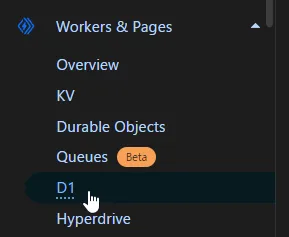
- Go to “D1” under the “Workers and Pages” tab
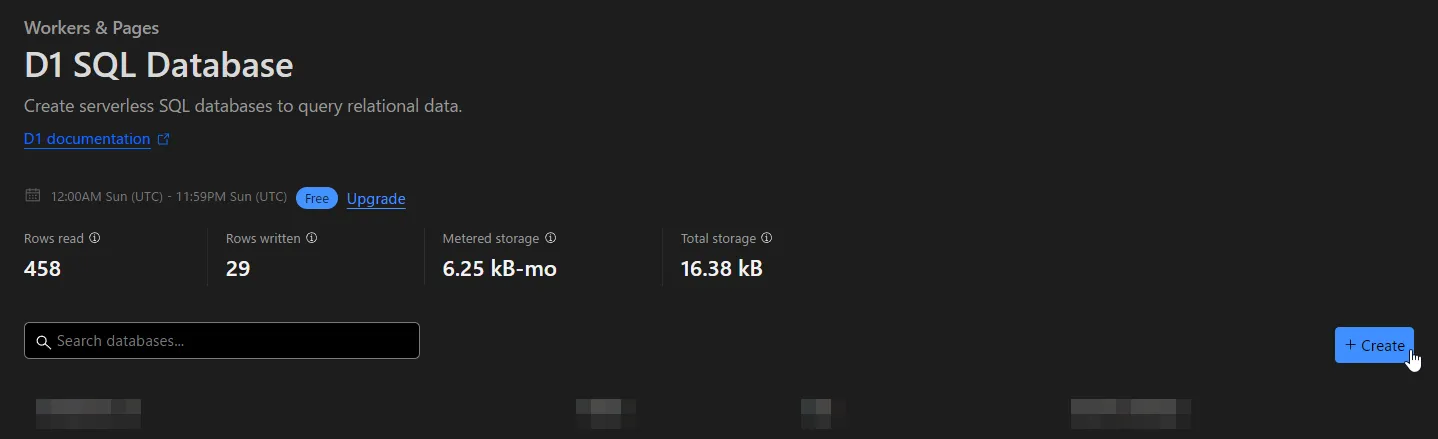
- Create a D1 database with any name you want
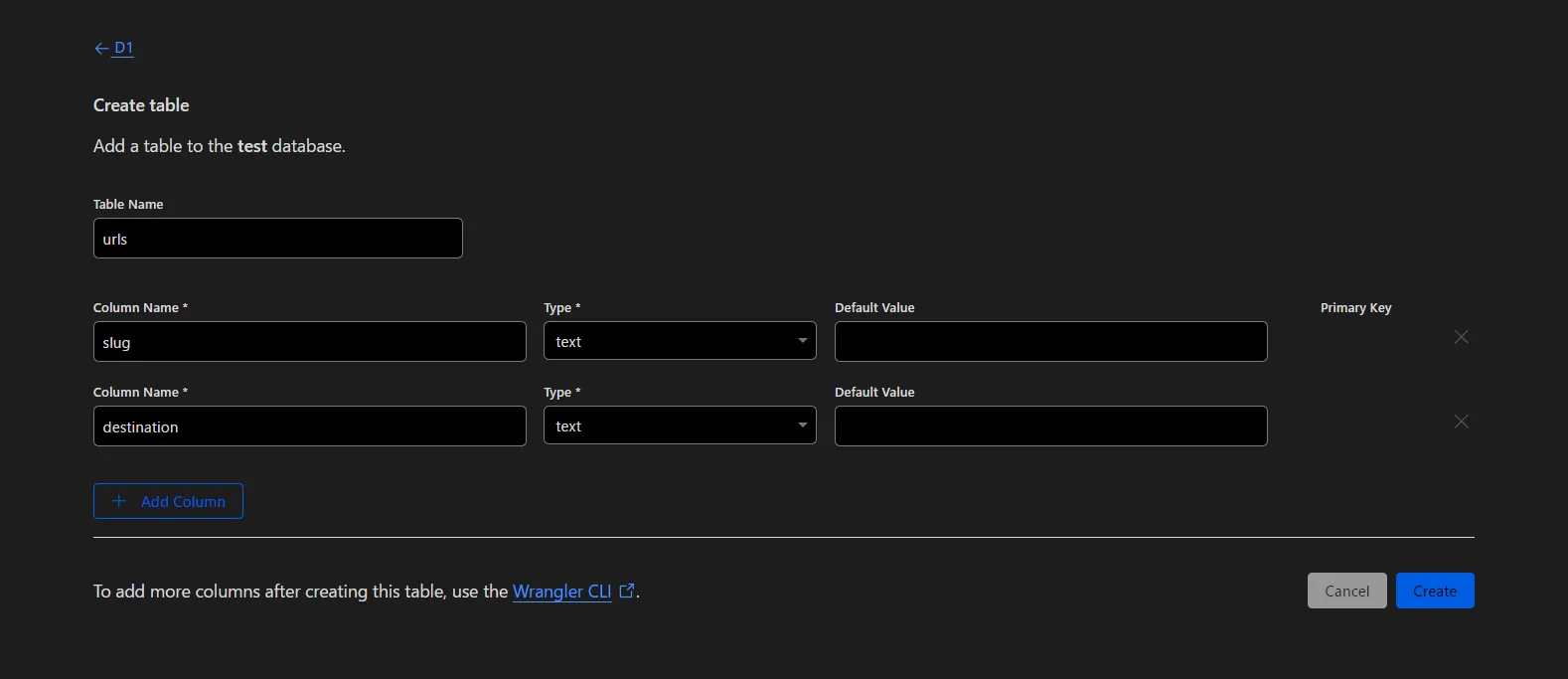
- Once the database has been created, create a table with;
- the name “urls”
- the columns “slug” and “destination” (both text)
-
Go to the “Workers” tab, and create a new worker, and continue to project
-
Under the “settings” tab, add the following environment variables:
| Key | Value |
|---|---|
| API_TOKEN | Your API token |
| NOT_FOUND_URL | The URL to redirect to if the slug is not found |
| TRACKING_API_TOKEN | Your tracking API token |
| TRACKING_API_URL | Your tracking API URL (leave as anything for now) |
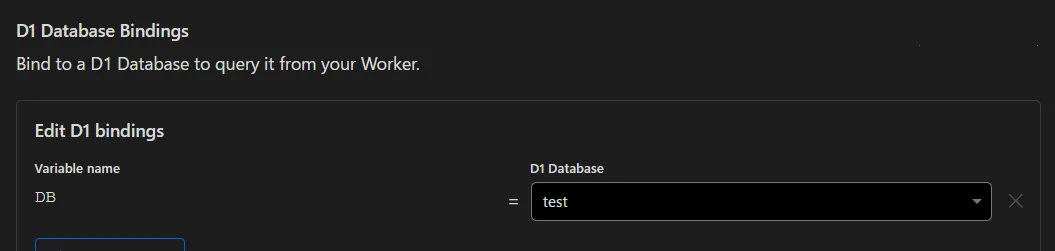
- Bind the D1 database we created before to the worker, with the variable name “DB”
-
Save the changes, and now go to “Edit Code” on the top right
-
Replace
index.jswith the following; skip to below
export default {  async fetch(request, env) {    return await handleRequest(request, env);  },};
async function handleRequest(request, env) {  const url = new URL(request.url);  const path = url.pathname;
  // Check if it's an API endpoint  if (path.startsWith("/api/")) {    // Verify Bearer token    const authHeader = request.headers.get("Authorization");    if (!authHeader || !authHeader.startsWith("Bearer ")) {      return new Response("Unauthorized", { status: 401 });    }
    const token = authHeader.split(" ")[1];    if (token !== env.API_TOKEN) {      return new Response("Unauthorized", { status: 401 });    }
    // Handle API endpoints    try {      if (path === "/api/add" && request.method === "POST") {        return handleAdd(request, env);      } else if (path === "/api/delete" && request.method === "POST") {        return handleDelete(request, env);      } else if (path === "/api/list" && request.method === "GET") {        return handleList(env);      } else {        return new Response("Not Found", { status: 404 });      }    } catch (error) {      if (error.message === "No JSON in request") {        return new Response("Bad Request: No JSON found in request body", { status: 400 });      }      throw error; // Re-throw other errors    }  }
  // Handle redirect for short URLs  return handleRedirect(request, env);}
async function getJSONFromRequest(request) {  const contentType = request.headers.get("content-type");  if (!contentType || !contentType.includes("application/json")) {    throw new Error("No JSON in request");  }
  try {    return await request.json();  } catch (error) {    throw new Error("No JSON in request");  }}
async function handleAdd(request, env) {  const { slug, destination } = await getJSONFromRequest(request);
  if (!slug || !destination) {    return new Response("Missing slug or destination", { status: 400 });  }
  try {    // Check if the slug already exists    const existingSlug = await env.DB.prepare("SELECT slug FROM urls WHERE slug = ?")      .bind(slug)      .first();
    if (existingSlug) {      return new Response("Slug already exists", { status: 409 });    }
    // If the slug doesn't exist, proceed with insertion    await env.DB.prepare("INSERT INTO urls (slug, destination) VALUES (?, ?)")      .bind(slug, destination)      .run();    return new Response("URL added successfully", { status: 200 });  } catch (error) {    return new Response("Error adding URL: " + error.message, { status: 500 });  }}
async function handleDelete(request, env) {  const { slug } = await getJSONFromRequest(request);
  if (!slug) {    return new Response("Missing slug", { status: 400 });  }
  try {    // First, check if the slug exists    const checkResult = await env.DB.prepare("SELECT slug FROM urls WHERE slug = ?")      .bind(slug)      .first();
    if (!checkResult) {      return new Response("Slug not found", { status: 404 });    }
    // If the slug exists, proceed with deletion    await env.DB.prepare("DELETE FROM urls WHERE slug = ?").bind(slug).run();
    return new Response("URL deleted successfully", { status: 200 });  } catch (error) {    console.error("Error deleting URL:", error);    return new Response("Error deleting URL: " + error.message, { status: 500 });  }}
async function handleList(env) {  try {    const result = await env.DB.prepare("SELECT * FROM urls").all();    return new Response(JSON.stringify(result.results), {      status: 200,      headers: { "Content-Type": "application/json" },    });  } catch (error) {    return new Response("Error listing URLs: " + error.message, { status: 500 });  }}
async function trackVisit(slug, request, env) {  const country = request.headers.get("CF-IPCountry") || "Unknown";  console.log(env.TRACKING_API_URL);  try {    await fetch(env.TRACKING_API_URL, {      method: "POST",      headers: {        "Content-Type": "application/json",        Authorization: `Bearer ${env.TRACKING_API_TOKEN}`,      },      body: JSON.stringify({        slug,        country,      }),    });  } catch (error) {    // Log the error, but don't prevent the redirect    console.error("Error tracking visit:", error);  }}
async function handleRedirect(request, env) {  const url = new URL(request.url);  const slug = url.pathname.slice(1); // Remove leading slash
  if (!slug) {    return Response.redirect(env.NOT_FOUND_URL, 302);  }
  try {    const result = await env.DB.prepare("SELECT destination FROM urls WHERE slug = ?")      .bind(slug)      .first();    if (result && result.destination) {      // Track the visit before redirecting      await trackVisit(slug, request, env);      return Response.redirect(result.destination, 302);    } else {      return Response.redirect(env.NOT_FOUND_URL, 302);    }  } catch (error) {    console.error("Error redirecting:", error);    return Response.redirect(env.NOT_FOUND_URL, 302);  }}
The worker is now set up!
Section titled “The worker is now set up!”You can now either;
Frontend Setup
Section titled “Frontend Setup”Set the following environment variables in your frontend:
| Key | Value |
|---|---|
| PASSWORD | A password to protect the frontend |
| WORKER_URL | The URL of your worker |
| WORKER_API_TOKEN | The API token you set in the worker |
| WORKER_TRACKING_TOKEN | The tracking API token you set in the worker |
| NEXTAUTH_SECRET | A secret for NextAuth (random string) |
-
Deploy the frontend to your server with Coolify (recommended)
- Set the Install command to
bun iand the build command tobun run build - Set the start command to
bun start
- Set the Install command to
-
Manual setup
- Coming soon!
Once you have deployed the frontend, you can access it at the URL you deployed it to. Login with the password you set in the environment variables, and have fun!
Analytics Setup
Section titled “Analytics Setup”- Set the
TRACKING_API_URLenvironment variable in the worker to:https://your-frontend-url/api/worker/analytics
API Usage
Section titled “API Usage”Add a URL
Section titled “Add a URL”- Endpoint:
https://your-worker-url/api/add - Method:
POST - Headers:
Authorization: Bearer YOUR_API_TOKEN
- Body:
{"slug": "your-slug","destination": "https://your-destination-url"}
Delete a URL
Section titled “Delete a URL”- Endpoint:
https://your-worker-url/api/delete - Method:
POST - Headers:
Authorization: Bearer YOUR_API_TOKEN
- Body:
{"slug": "slug to delete"}
List all URLs
Section titled “List all URLs”- Endpoint:
https://your-worker-url/api/list - Method:
GET - Headers:
Authorization: Bearer YOUR_API_TOKEN